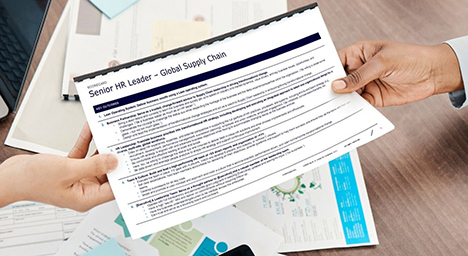
What a True Scorecard Is (and Why Most Companies Get it Wrong)

What a True Scorecard Is (and Why Most Companies Get it Wrong)
Most hiring mistakes start long before the interview. The problem isn’t bad candidates; it’s unclear expectations and lack of alignment.
We see it all the time: companies think they’ve built a “scorecard,” but what they really have is a job description with a new label. The outcome is still the same misalignment that leads to costly hiring mistakes.
The Who methodology, pioneered by leadership advisory firm ghSMART and outlined in the best-selling book Who: The A Method for Hiring, introduced the Scorecard nearly 30 years ago to solve this problem. It brought precision and accountability to one of the most expensive and consequential decisions any company makes: who to hire. As the idea spread, its meaning began to blur, and many of the “scorecards” used today have lost the rigor and clarity that made the original tool so effective.
The Real Deal Scorecard
A true Scorecard defines what success looks like in a role before the hiring process begins. It creates a shared language for evaluating candidates, onboarding new hires, and managing performance over time.
When done right, a Scorecard does three things:
- Aligns stakeholders around what “great” actually means for a role.
- Anchors hiring decisions in outcomes, not opinions.
- Builds accountability by defining how success will be measured.
A well-written Scorecard replaces assumptions with clarity, giving every hiring conversation a common definition of success.
Where Most Companies Go Wrong
Many organizations believe they’re using Scorecards, but they’re really using job descriptions in disguise.
A job description typically:
- Lists responsibilities without defining measurable results.
- Focuses on activities rather than outcomes.
- Uses vague statements like “strong communication skills” or “strategic mindset.”
- Prioritizes credentials (like degrees or years of experience) over performance evidence.
- Lacks a clear timeline for when success should be achieved.
These documents sound complete but provide little clarity. Stakeholders interpret them differently, and alignment breaks down before the first interview even begins. The result: inconsistent assessments, unclear expectations, and mis-hires that could have been avoided.
What a True Scorecard Looks Like
A real Scorecard changes the conversation from “What do we want this person to do?” to “What results must this person deliver?”
It has three essential parts:
- Mission – Why the role exists. The one-sentence purpose that connects this role to the organization’s strategy.
Example: “Drive profitable growth in our enterprise segment by expanding customer retention and renewals.”
- Outcomes – The 5–8 measurable results that define success.
Example: “Increase net revenue retention from 80% to 90% within 12 months.”
- Competencies – The skills and behaviors needed to achieve those outcomes in your unique context.
Example: “Builds high-performing teams, acts with urgency, communicates directly.”
When stakeholders are aligned on these three things, hiring moves from gut feel to disciplined judgment. The Scorecard can be not just a hiring tool but a performance management tool, guiding onboarding, development, and reviews.
A Real-World Example
A growth-stage founder we worked with thought her team was aligned on what “great” looked like for a new Head of Product. Five conversations later, she realized everyone had a different definition.
Once they built a Scorecard—anchored in measurable outcomes like “Deliver three major feature releases per year with a 90% on-time rate”—the search changed instantly. Every candidate was assessed against the same outcomes. Debate turned into alignment.
When the right candidate joined, onboarding was faster, the team knew exactly what success meant, and the new leader hit their targets early. That’s what happens when you replace opinions with clarity.
Fixing or Building Your Scorecards
If your “scorecard” looks suspiciously like a job description, here’s how to startimprove it:
- Write one clear mission statement for the role (“The purpose of this role is to…”).
- Define 5–8 specific outcomes tied to metrics and timelines.
- Identify the skills and behaviors required to deliver those outcomes.
- Align with your hiring team before interviewing a single candidate.
Getting this right turns hiring from guesswork into a repeatable, measurable process that scales.
How WhoAi Can Help
We hear it all the time: “Writing a Scorecard is hard.” That is one of many reasons we are developing WhoAi, to make it faster and easier to build an effective, outcomes-driven Scorecard.
The WhoAi Scorecard Generator helps teams create, share, and align on ‘real’ Scorecards in minutes, grounded in the proven Who methodology and informed by decades of experience building thousands of Scorecards across roles and industries.
Getting the Scorecard right is the foundation you need to hire with confidence, build aligned teams, and set leaders—and your new hire—up for success.